Plan three stages
Awareness, consideration and conversion.
How to plan a welcome series, a nurture sequence and an offer sequence, and how to measure each stage.
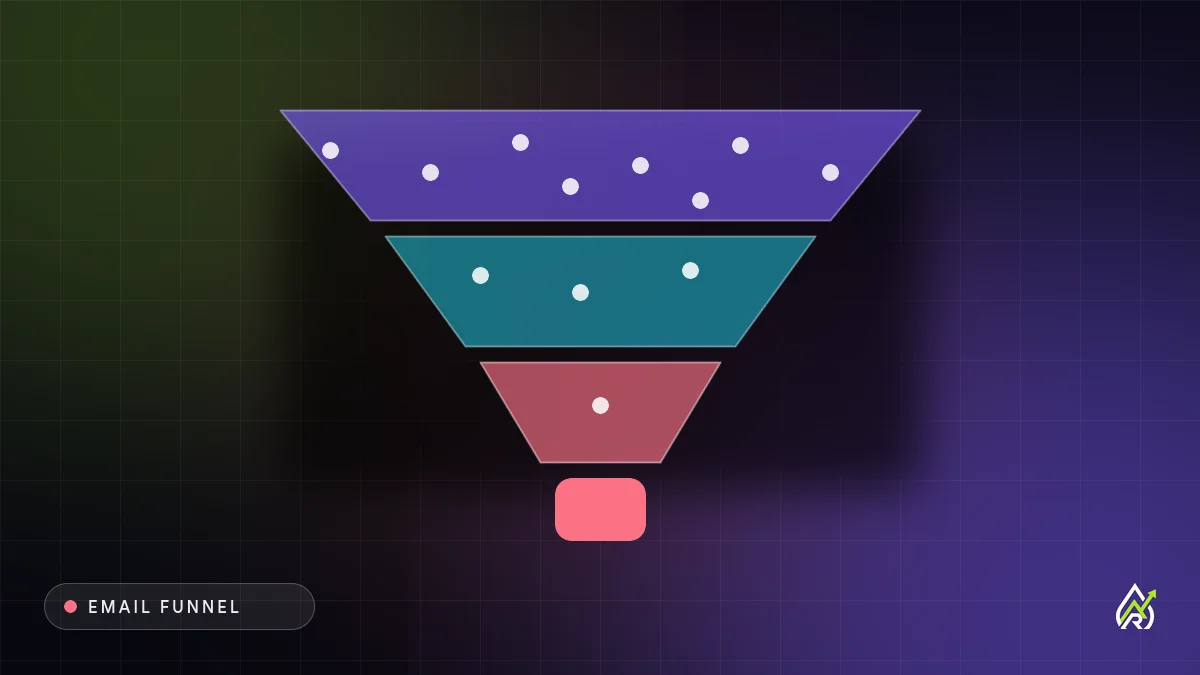
An email funnel is a planned sequence of messages that moves a subscriber from first hello to first purchase or booking, and then to repeat business. Instead of sending one-off blasts, you decide what each person should learn, feel and do at each stage, and let automation deliver it at the right time.
A welcome series is read more than almost anything else you will send, so use it well. Message one delivers what you promised at sign-up. Message two tells your story and what makes you different. Message three shares your most helpful piece of content. Message four invites the first step.
Only email people who asked to hear from you, tell them what they will receive, and make unsubscribing easy. It protects your reputation as well as keeping you inside the law.
You do not need dozens of segments. Start with where the subscriber came from and what they did: downloaded a guide, bought once, abandoned a cart or booked a call. Send different follow-ups to each group.
Watch clicks, replies, conversions and revenue per email rather than opens alone, since some email apps preload images and inflate open rates. Compare each stage to see where people drop away, then improve the weakest message first.
Remove addresses that bounce, pause people who have not engaged in a long time and keep complaint and unsubscribe rates low. A smaller engaged list usually performs better than a large ignored one.
A newsletter blast reaches everyone at once, whether or not they are ready for it. A funnel meets people where they are. Someone who joined yesterday needs an introduction; someone who has read five emails and clicked twice may be ready for an offer; someone who bought last month might need a how-to guide or a gentle reminder to reorder. By responding to behaviour and timing, funnels feel relevant instead of noisy, and they work while you are busy doing something else.
Before writing any emails, sketch the journey on a single sheet of paper. Start with how someone joins: a lead magnet, a checkout, a booking form or an event sign-up. Then list what they should know and feel after each message and the action you want. A simple service business funnel might look like this.
Adjust the timing for your sales cycle. A cafe voucher may need two emails in a week; a website redesign may need a month of nurturing.
Tell us about your business and we will suggest a simple, honest plan. Free consultation, no obligation.
Get a free consultationYour subject line has one job: to make the right person curious enough to open. Be specific, avoid ALL CAPS and misleading tricks, and use the preview text to add context. Compare "A quick update" with "Three checks before you hire a web designer". The second promises something useful. Read your subject lines aloud, and imagine them arriving between a message from a friend and a delivery notification.
Most emails are read on mobile devices, so use a single column, short paragraphs, generous spacing and buttons large enough for a thumb. Keep the main message near the top and avoid relying on images to carry meaning, since some inboxes block them by default. Plain, text-style emails from a real person often perform well because they feel personal, especially for service businesses.
A funnel only works if the emails arrive. Use a reputable email service, authenticate your sending domain with SPF, DKIM and DMARC, send from a consistent name and address and never buy lists. Keep an eye on bounce and complaint rates, and prune inactive contacts periodically. Major mailbox providers expect bulk senders to authenticate messages and make unsubscribing easy, so check the current guidelines when you set up.
Your funnel should not live in isolation. Add sign-up forms to your website, blog posts and social profiles. Use consistent tone and branding across your emails, landing pages and ads. Send subscribers to relevant pages, not always the homepage, and track those clicks with UTM parameters so that your analytics show which emails bring visitors and sales. When you publish a new article or launch a service, mention it in the funnel where it fits.
A local gym might send a welcome email with a free trial link, a video tour of the facilities, a story from a member and a reminder before the trial ends. A consultant might send a guide, three practical tips over two weeks, a case study and an invitation to a discovery call. An online shop might send a welcome offer, a guide to choosing the right product, a review roundup and a post-purchase care sheet. The structure is similar, but the content reflects what each audience needs to decide.
Review each email in the sequence every month or two. Look at clicks, replies and conversions, and compare the stages. If people stop clicking after the third email, check whether it is too long, too salesy or off-topic. If many click but do not convert, look at the landing page or offer. Change one thing at a time, note the date and result and keep a record. A funnel improves through small edits, not dramatic rewrites.
A simple welcome sequence can be set up in an afternoon in most email tools. Bring in help when you need segmentation across several products, integrations with a shop or booking system, deliverability fixes or reports that connect email to revenue. Choose a partner who explains the plan in plain terms, lets you own the list and accounts and does not promise guaranteed returns.
If you are stuck for content, borrow the shape of emails that consistently work. In the awareness stage, send a welcome that delivers what you promised, a short note from the owner explaining why you started, and a "start here" email linking to your three most useful pages. In the consideration stage, send a frequently asked questions email, a short case study showing a problem, what you did and the result, and a comparison guide that helps readers choose. In the conversion stage, send a clear invitation to book, a reminder that answers the last objection and a final note explaining what happens if they say yes and what happens if they wait.
There is no perfect send time, only what suits your audience. Businesses selling to professionals often see better engagement during weekday mornings, while consumer brands may do better in the evening or at weekends. Test a few slots, compare clicks and replies, and keep the pattern that works. As for frequency, more is not always better. A sequence of five or six emails over two weeks is reasonable for a new subscriber, followed by a steady schedule, such as one useful email every week or two. If people begin to unsubscribe, slow down or improve the content.
A first name in the greeting is a start, but real personalisation is about relevance. Mention the resource they downloaded, the product they viewed or the service they asked about. Refer to their industry or location where you know it. Ask a simple question in the welcome email, such as "What is the biggest challenge you are facing?", and read the replies. Answering personally builds a relationship and gives you ideas for future content.
Always make it clear what people are signing up for, keep a record of consent and include your business name, physical address and a working unsubscribe link. Honour opt-outs promptly. If you email people in the EU, the UK or Canada, follow the stricter consent rules that apply to them. Never hide the sender or use misleading subject lines. These practices are not just legal boxes to tick; they signal respect, and respect is the foundation of a list that buys.
Rainmaker Art can plan, build and manage it with you. Send a few details and we will reply with clear next steps.
Get a free consultationAwareness, consideration and conversion.
Four short messages, one job each.
By source and by behaviour.
Welcome, abandoned cart, thank-you and win-back.
Clicks and revenue, not opens alone.
Enough to do the job and no more. A welcome series of three to five messages is a common start, followed by a nurture and offer sequence sized to how long your buyers take to decide.
Weekly or fortnightly suits many businesses. Let your unsubscribe and complaint rates tell you if it is too often.
Any reputable platform with automation, segmentation and good deliverability. Choose one that fits your budget and integrates with your website.
Tell us about your business and we will suggest where email fits with your site and marketing. No pressure, no jargon.